

Newsletter

True Religion
Dear Mount Calvary Lutheran Church,
What’s the problem with the Lutheran Church? This was the unspoken (and sometimes spoken) question at the triennial convention of the Lutheran Church Missouri Synod, our denomination, this summer here in Phoenix. The data is rough. The Lutheran Church Missouri Synod is the oldest denomination in American which an average lay membership of about 70. The church body has shrunk by about a third since 2010 and has closed several institutions. The data shows that the Lutheran church frankly struggles to attract and retain people who are not from a German or Scandinavian heritage. Finally, the places where Lutheran churches were built, the rural Midwest, are losing population even as places with historically little or no Lutheran presence, like the South, boom in population.[1] Of course, things aren’t like they used to be. In Christian America, people joined a church and showed up on Sundays (sometimes) because it was the respectable thing to do. In post-Christian America, we are all missionaries who, by being the church, bring the church to people during the rest of the week. However, for all the laments about cultural change and losses in the culture wars along the way, some other Christian traditions- Evangelicals, the Anglican Church in North America (arguably our closest cousins), and recently Catholics- have found a way forward to both spiritual and numerical growth. So, what gives? Regardless of the answer, what you see at Mount Calvary on a Sunday morning is an anomaly: a young, growing congregation with a history of immigrant ministry.
So, what is the problem with the Lutheran Church? It isn’t just pastors or data nerds like me asking the question. This question came from a man my age who recently started attending his home congregation, a large Lutheran church, again for the first time since his teens. He was grateful to be home but looked around at a church with lots of older folks (praise God!)[2] and even lots of money, but it was unclear what the path forward was. What would happen to this church in twenty years? He said some people at this church think the church needs to be more conservative theologically; some people think it needs to be more liberal theologically; some people think the worship needs to become more evangelical; some think we need to hitch our train to the numbers of young Catholic converts. What is the solution? What is the problem with the Lutheran Church? I told him my answer, and it is just one person’s opinion, mind you. But I believe in the Lutheran Church, spiritual growth, for far too long, has looked like intellectual growth alone. I believe we have neglected growth in virtue, love of God, and service of one another. For example, new member classes have taught why we are right about justification and infant baptism (and we are!) but have failed to teach new members how to pray, where to serve, or how to discern God’s will in their lives. We are all head and no heart, all talk but no action.
When the inspired New Testament authors write about the Christian life, they write the following:
· “Religion that is pure and undefiled before God the Father is this: to visit orphans and widows in their affliction, and to keep oneself unstained from the world.”
-James 1:27
· “First of all, then, I urge that supplications, prayers, intercessions, and thanksgivings be made for all people, for kings and all who are in high positions, that we may lead a peaceful and quiet life, godly and dignified in every way.”
-1 Timothy 2:1-2
· “In the same way, let your light shine before others, so that they may see your good works and give glory to your Father who is in heaven.”- Matthew 5:16
· “Whatever you do, work at it with all your heart, as working for the Lord, not for human masters.”- Colossians 3:23
· “And it is my prayer that your love may abound more and more, with knowledge and all discernment, so that you may approve what is excellent, and so be pure and blameless for the day of Christ, filled with the fruit of righteousness that comes through Jesus Christ.”-Philippians 1:9-11
These verses encourage the Christian to be very intentional about how he or she will live. These verses are not legalistic or excessively prescriptive, but they do call for growth in faith, hope, and love. The Christian is called to pray, discern, and serve.
In the spring of 2025, I introduced many of our college students to some of these concepts. I encouraged them to write a personal “rule of life” during a retreat. A rule of life is a personal mission statement and a series of commitments around things like prayer and service. This rule of life became a personal template for prayer, fasting, worship, community, and many other aspects of life. In the spring of 2026, some leaders within our church launched Memento, a men’s ministry program motivated by many of the same concerns I outlined in the first part of the letter. Memento leveraged the church year and Christian history to create very intentional community and accountability for men; it was readily adopted by our student leaders.
Beginning today, after the service, we look at the text, “Discerning the Spirits,” together as a congregation. If you have ever had to make a big decision or wondered what God’s plan is for your life, this is the study for you. This book will teach us to pray and discern God’s will in our lives. There will be a large-group teaching time led by me on the book. Afterwards, there will be smaller breakout sessions to discuss and apply what we heard. I look forward to leading a session for older adults while other leaders lead groups of younger adults. Of course, there will be snacks and refreshments available.
I hope to see you this morning, and I pray that the Lord would strengthen you in heart, soul, and mind at this time. Beloved, let us love one another, for this is from God.
In Jesus’ Service,
Pastor Kurt Hellwig
[2] Our culture and our church body wrongly tend to elevate youth as if it were a solution in itself.
What has Washington to do with Jerusalem?
America at 250

The third-century church father Tertullian famously asked the question, “What does Athens have to do with Jerusalem?” He expected the response, “nothing!” Tertullian questioned the role of Greek philosophy in Christian theology. Nevertheless, his question has become a byword over the years for measuring the relationship between reason (Athens) and faith (Jerusalem). In our time, we often ask questions about the relationship between church (Jerusalem) and state (Washington). I get a lot of questions about church and state, and the 250th anniversary of our country this month presents an opportunity to reflect on the role faith has played in our nation’s history and how we as Christians may continue to bless and enhance our republic.
If I can put on my historian hat for a second, the Christian religion played a vital role in the founding of our nation, even if not all the founders were orthodox Christians per se. As many of you know, I work for the charter school network, Great Hearts, while serving at Mount Calvary. Our school conference last year centered on the founding of America, and the keynote address explored the fact that the Book of Exodus is the most quoted document amongst America’s founders. Exodus, the journey from slavery to freedom, is the metanarrative of all mankind, even as it has been imperfectly lived in our own nation’s history, and as the revolutionary pamphlet “Common Sense” says, “the cause of America is the cause of all mankind.” From quotations from Exodus to George Washington’s appeal for a National Day of Prayer and Thanksgiving (the origins of our modern holiday dedicated to gluttony and watching the Dallas Cowboys lose), the founders found inspiration in the Biblical narrative. This is over and against the leaders of the French Revolution. This is not to say that the founding fathers were all Christians. Thomas Jefferson notoriously edited and “demythologized” the Bible. Many of the founders were Unitarians, who deny the Trinity, or Deists who believe in God and not much else in the sphere of religion. While Unitarians are scarce today, their presence set the stage for the positive participation of Mormons, Jews, and other non-Trinitarians today in America.
This leads to a second point that, from a purely historical standpoint, participation in organized religion, regardless of the religion, has been a tremendous blessing to America and its people over the years. French intellectual Alexis de Tocqueville travelled America in the 1830s in search of what united and separated America and France after their respective revolutions. He recorded his observations in the landmark text Democracy in America. In a simple and somewhat simplistic explanation, the role of local, organized religion separated the two revolutionary nations. Churches are mini-democracies. Even at Mount Calvary, we have a constitution, elected officials, a voters’ assembly, and inalienable rights (namely God’s will). In a congregation, people are required to get along with other people they might not entirely agree with. In a church, people have to solve problems without jumping to sue one another at the drop of a hat. Church is a practice for society as a whole. Please think about this next time someone’s social media bothers you, or you feel like skipping a voter’s meeting. The decline of organized religion has left our nation and its people all the poorer. Study after study has shown the correlation between happiness and going to church. As church-going has declined, other values have taken the place of God and family, namely, wealth accumulation and career aspiration. Trading the Lord for LinkedIn is hardly an improvement. Our inability to rest and sabbath feeds our disillusionment and cynicism. Our self-centeredness makes it difficult to share a country with those we disagree with when we ought to do just that. Even from a secular standpoint, churches have a lot to offer our democracy.
So far, we have explored the historical and sociological connections between America and faith. How about the theological side of things? In other words, what does God want us as Christians to do? How can we be faithful Christians and citizens?
In a republic where it feels like the next election is always around the corner, it can be easy to think we are one election away from triumph or disaster. The continuous political process can be anxiety-inducing and flatly unhelpful. Rarely is an election the most important of our lifetimes. The simple and true alternative is that God is on the throne. The Lord raises up and brings down rulers for his purposes. In the story of Esther, Esther’s father reflects on her rise to the throne, saying, “God prepared you for a moment such as this.” While it can be easy to see how good rulers are prepared by God, Psalm 46 notes that even bad rulers are appointed by God for a season as God stands like a fortress in the midst of the turbulent nations. Please think of this next first Wednesday in November. Jesus is king, meaning he is the one pulling the strings regardless of our faithfulness.
God rules, and he does so through the power of the church and the state, even as both of these authorities have different powers. The power of the state is the sword or the law. Paul says in Romans 13,
“Let every person be subject to the governing authorities. For there is no authority except from God, and those that exist have been instituted by God. Therefore, whoever resists the authorities resists what God has appointed, and those who resist will incur judgment. For rulers are not a terror to good conduct, but to bad. Would you have no fear of the one who is in authority? Then do what is good, and you will receive his approval, for he is God's servant for your good. But if you do wrong, be afraid, for he does not bear the sword in vain. For he is the servant of God, an avenger who carries out God's wrath on the wrongdoer.”
In summary, governing authorities, when they are governing well, bring judgment on those who break the law. The church has been given a different mission and a different power. We can see that in Jesus’ Great Commission, “go and make disciples of all nations.” The power of the church is the word of grace and forgiveness. It is the invitation to receive Jesus. This gives the church and the state different roles in God’s ongoing care for the world.
The church is the voice of God to our world. Therefore, she is both the epicenter of grace and a moral standard. Lutherans are familiar with the church as the epicenter of grace. We begin each service reminded of God’s forgiveness. We just described God’s mission in bringing Jesus to the world. The church is also called to voice God’s will in the world. This means both the law and the gospel; it means that the church does address topics that are politically adjacent. Things would be better if more people followed God’s law. However, as we tactfully do so, the church is always:
· Non-partisan. I recall my grandfather saying that the people in the pews should never be able to guess how the pastor votes. I have tried to embody this reality in my own ministry, especially as major political parties have serious flaws. We need to keep being equal opportunity offenders.
· Non-prescriptive. The church should not legislate to the state what the law should be in every detail. For example, the church is pro-life; God values human life regardless of disability or inconvenience, from before birth to bodily death, and so do we. But there is wisdom in ambiguity over what exactly this looks like in legislation.
· Local. I can recall a LCMS congregation in the city of St. Louis working with a city councilwoman who was married to a woman, an atheist, and endorsed by the Democratic Socialists of America to secure a grant for a new community center in an underprivileged neighborhood on the church’s property. The councilwoman knew the LCMS was a theologically conservative church body, but there was common ground and work to be done together. I will talk with anyone and work to find common ground with anyone. These kinds of partnerships only happen at a local level in our polarized environment.
In summary, the church is both a model of democracy and the conscience of our nation.
Non-Christians should look at and see a healthy, cooperative community where people can respectfully disagree. In this way, the church has been a blessing to America from well before 1776. While the church is primarily an epicenter of grace, the church from ancient times until now has shaped and voiced the public conscience and should continue to do so carefully. When God calls us to faith, he calls us to be different. In America, let it be said of the church, “You are the salt of the earth.”
In Jesus’ Service,
Pastor Kurt
Gardening the Heart
Gardening the Heart
Dear Mount Calvary Lutheran Church,
What makes some places appealing and others not? Can you feel the atmosphere of a situation when you walk in? What you are feeling and trying to describe is what consultants frequently describe as culture. There are many sayings about culture. Consultant guru Peter Drucker once said, “culture eats strategy for breakfast.” Likewise, we are told, “culture is what people do when they aren’t thinking about what to do.” To nerd out for a second, the etymology of the word culture is fascinating. It actually comes from the Greek verb for gardening. Perhaps you can hear echoes of the word culture in the words agriculture or horticulture. Lent is traditionally a season of taking inventory, of looking inside, of looking in the barns of our hearts. What is in there? Is it prize crops or manure? Probably both, as we are sinners and saints. Yet, if were tired of being the ones with bad culture (or vibes for our younger readers), or if you’re just tired of sin, Lent is a time for that culture-building work of gardening our hearts. Yet, if you're like me, you have probably never done this intentionally before. With this metaphor in mind, what does it look like to garden the culture of our hearts?
One begins gardening by planting, and the right crops have to be planted. Jesus told a story,
“A sower went out to sow. 4 And as he sowed, some seeds fell along the path, and the birds came and devoured them. 5 Other seeds fell on rocky ground, where they did not have much soil, and immediately they sprang up, since they had no depth of soil, 6 but when the sun rose they were scorched. And since they had no root, they withered away. 7 Other seeds fell among thorns, and the thorns grew up and choked them. 8 Other seeds fell on good soil and produced grain, some a hundredfold, some sixty, some thirty. 9 He who has ears, let him hear.”
- Matthew 13:4-9
This is a familiar story, and an earthly story with a heavenly meaning. The seed is simply God’s Word; it must be planted in the soil of our hearts. This can be through the Sunday service, Bible Study, audio booking the Bible on the way to work, or during a time of family devotion. When it comes to planting, God’s Word is the right thing to prioritize. Under the right conditions, God’s words produce the fruits of the Spirit. If you’ve been in church a while, you’ve heard them before, but here they are again: “the fruit of the Spirit is love, joy, peace, patience, kindness, goodness, faithfulness, gentleness, self-control.” These and so many other virtues will come from God’s word.
Successful gardening requires nurturing the young plants. Let’s suppose that God’s Word is producing, and it always does, some green shoots in our hearts. We have some temperance with our turnips, peace and patience with your pumpkins, and all-around virtue on the vine. What now? Let me tell you a story. I was blessed to grow up in a house with a yard and a large garden in the backyard. This was not a vegetable patch but a manicured collection of water-tolerant trees and shrubs. Every year, they would all have to be trimmed and pruned. This would literally take several long mid-summer days of rare Seattle sunshine. It would go on the family calendar, and we would trim and prune and pick up the remains for a couple of afternoons. It was done because pruning makes way for new growth. Under the present conditions, growth is limited. Yet when there is a setback, more growth can occur in the long term. Hardships are God’s way of pruning the goodness in our hearts if we can recognize it. Naturally, difficulties are not pleasant or enjoyable, yet from them comes growth if we acknowledge with the author to the Hebrews, “God disciplines everyone he accepts as a son.”
Finally, one must pull weeds to be successful at gardening. Weeds can look desirable, like the oft-desired dandelion. Weeds do spread fast when they are allowed to take root. They reproduce like rabbits. However, weeds are simply not what we are trying to grow. We don’t even really know where they come from. Maybe you’ve heard people in church talk about something called original sin. Original sin says, amongst other things, that humans have an inclination to do evil, and this inclination will almost manifest itself sooner of later like weeds in a garden. It’s not a cheerful thought, but it is a practical one. Why is my child doing this? Original sin. Why is my adult child not doing this? Original sin. Why is my boss a jerk? Original sin. Why can’t the Cardinals have a good team? They are cursed, which is something different… The call of discipleship is to renounce the weeds, no matter how desirable they look, and pull them up. It can feel hopeless, but we do have a choice. In my work with addicts, many folks with an addiction have an external locus of control. They attribute the addiction to their circumstances, which are often unjust and rightly wrong. Sin always hurts someone. Yet, pulling weeds is as simple as saying no. Really saying no to what would choke out the good God is trying to grow in us. We cooperate with the gardener, God, in this area. You can have an internal locus of control.
My friends, culture drives who we are and what we do. Now more than any other time of the year, we focus on becoming better people. It sounds simplistic and a tad moralistic, and perhaps it is. Yet, if we don’t do it, it won’t be done. This spring, join me in the fields of the heart, preparing the soil for a beautiful harvest at a later date.
May the God of all grace be with you in these 40 days.
In Jesus’ Service,
Pastor Kurt

Why We Fast

If a Christian from the first few centuries of church history visited Mount Calvary, he or she would find many familiar aspects. Communion, the eucharistic, has been central to Christian life since the beginning. The same goes for preaching, scripture reading, music, prayer, and even potlucks! (Originally, called agape or love feasts.) However, one aspect of faith that was central to Christian life for centuries, which has all but disappeared from Christian life in this country, is fasting. Fasting, often talked about but little practiced during Lent, uniquely deepens our dependence on God.
Jesus fasted and expected his disciples to fast too. Famously, Jesus fasted for 40 days. Jesus also said, “when you fast” (Matthew 6:16). The keyword here is when, not if. Likewise, we can see from Acts 13 and 14 that the first Christians fasted before making significant decisions. There is clearly some connection between fasting and a heightened awareness of God.
Like most of you, I did not grow up fasting. On the contrary, I recall thinking of fasting as something the Catholics did. Even they seemed to have watered it down. The Midwest Catholic fish fry is a wonderful, raucous celebration of gluttony that would put a Vegas buffet to shame. On vicarage, a jolly and rotund guest preacher who was known for his frequent trips to the town's doughnut shop humbly began a sermon on fasting, saying, “Clearly I’ve never done this!” I credit this man for having the courage to preach on fasting. Eventually, through his message and the sheer number of references to fasting in scripture, I decided to give it a try. I chose to fast on Ash Wednesday, and I thought I was going to faint after completing school chapel that morning. By the afternoon, I could not stop thinking of food. It seemed like I was just making life hard for myself. Fasting was making me less productive, and the Protestant work ethic in me thought, “Surely God wouldn’t want that!” I tried to stick it out. I still had work to do ahead of the evening service at Mount Calvary and began to pray desperately that God would give the insight needed to lead a quality service, or at the very least, just get me through it. Then it struck me, this was the point. Desperate prayer. Fasting is not a relic from the past, nor is it some magical formula to earn brownie points with God; fasting drives us into prayer.
Fasting is also a practice in self-discipline. Sometimes, we falsely equate Lent fasting with giving up sin. I have heard men say, “I am cutting back on alcohol this Lent, I know I have a problem,” or “I am giving up internet pornography for Lent.” Friends, we should always give up sin! Don’t wait for Lent. The 1st of Luther’s 95 theses was, “When our Lord Christ Jesus said ‘repent’ he willed that the entire Christian life be one of repentance.” To repent means to turn away from sin. It is an urban myth that Luther was somehow lighter on sin than his contemporaries. On the contrary, Luther’s initial concern was that the church needed to repent from both her many sins and her human-made, shortsighted solutions to sin. Only the blood of Jesus can cover our sins. Jesus calls us to repent of sin, receive his grace, resist sin, and repeat this process continuously! We are all called to resist sin. This is the real, game-time performance of being a Christian. Enter fasting. Fasting is a practice for resisting sin. If you can resist food for one day, you can resist that sin that you return to time and time again. Fasting is firing blanks so that when the real fight comes, you’ll be ready.
Our ministry for college-aged guys at Mount Calvary is called Memento, meaning “to remember.” This is a church wide program across the Lutheran Church-Missouri Synod. One of the things Memento asks us to remember is fasting and other Lenten disciplines. This Lent, our guys, led by Joel, have committed to the following:
· Total fasts on Ash Wednesday and Good Friday
· Skipping a meal on Wednesdays and Fridays
· Giving up all sweets and alcohol during Lent
· Giving up social media for Lent
· Only listening to sacred music and Lutheran influencers during Lent
· Daily devotions
· A scripture reading plan
· Reading a book together
· Working out together as a group three times a week
I am honored to join them in these. I could not be prouder of their commitment and zeal. These guys know they must manage themselves before they can fully take advantage of other opportunities that come their way. I would encourage you to take Lent for the opportunity it is. Yes, if you have not turned away from that favorite sin of gossip, or from the covetous call of online shopping at work, please do. Run away, pass Go, and do not look bad. Also, please apply the principle, “you get out what you put in,” to Lent. If you join our young men in some of these disciplines, you may be pleasantly surprised by the results when harder times come.
There is, of course, a danger in fasting or any other spiritual discipline. In my study on grief, we recently reflected on Luke 18, where Jesus tells this story,
“He also told this parable to some who trusted in themselves that they were righteous, and treated others with contempt: 10 “Two men went up into the temple to pray, one a Pharisee and the other a tax collector. 11 The Pharisee, standing by himself, prayed thus: ‘God, I thank you that I am not like other men, extortioners, unjust, adulterers, or even like this tax collector. 12 I fast twice a week; I give tithes of all that I get.’ 13 But the tax collector, standing far off, would not even lift up his eyes to heaven, but beat his breast, saying, ‘God, be merciful to me, a sinner!’ 14 I tell you, this man went down to his house justified, rather than the other. For everyone who exalts himself will be humbled, but the one who humbles himself will be exalted.”-Luke 18:9-15
I love this story. It is one of the reasons we named our son Luke. This is the gospel in a paragraph. Notice how the Pharisee said, “I fast twice a week.” Our training comes to nothing if it comes to boasting. Wherever you are in your walk with the Lord, please know that, in our failures, in our sin, in our frustrations, Lent teaches us to pray that simplest prayer, “God be merciful to me a sinner.” And He is.
In Jesus’ Service,
Pastor Kurt
Remember God, Remember His Word
Dear Mount Calvary Lutheran Church,
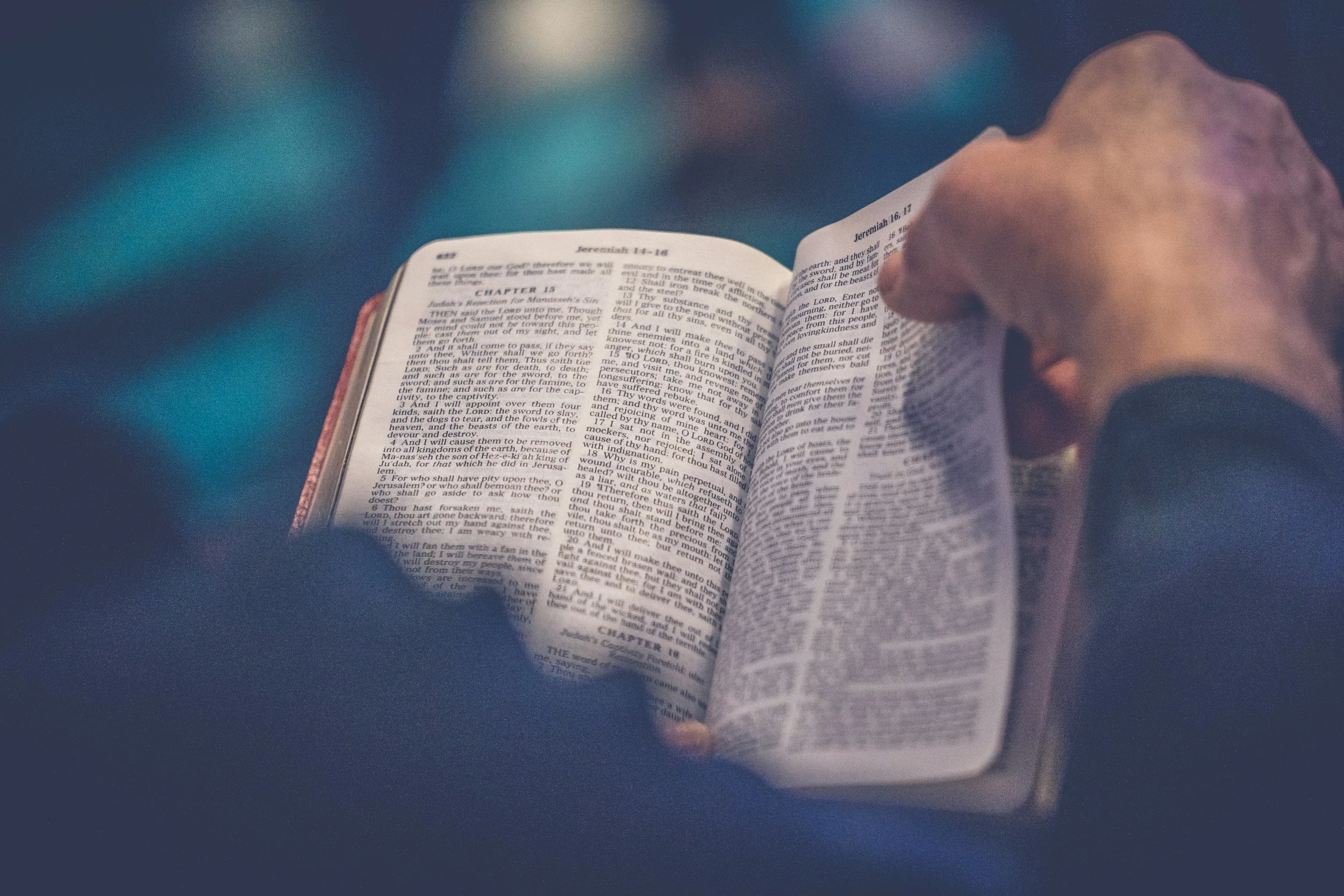
Did you read the best-selling book in the English language in 2025? No, it wasn’t on the New York Times’ best seller list, but the Bible sold 18 million copies in the United States this last year. This is nearly 9 times the number of the next best-selling book, Sunrise Reaping by Susan Collins. Bible sales were up 20% year over year, outpacing previous years. Generationally, Gen Z led all generations in Bible purchases. The most popular translation was the English Standard Version. The good book remains a great read.
Yet, the Bible is often bought, rarely read, and less understood. Christianity Today reports that less than half of self-identified Christians in the United States have read more than a few chapters on their own. The Bible itself says, “All Scripture is breathed out by God and profitable for teaching, for reproof, for correction, and for training in righteousness.” (2 Timothy 3:16) How sad it is when God’s own Word for our lives collects dust as a paperweight, shelf ornament, or mere heirloom? Well intentioned Christians often cite ignorance of the Bible as a barrier to study. Who wants to miscommunicate with God? Enter the ancient Christian tradition of group Bible study.
Bible study is our preparation for the challenges of modern life. The Psalmist juxtaposes the Bible with self-help literature when he says, “Your Word is a lamp to my feet and a light to my path” (Psalm 119:105). Additionally, we hear Solomon say, “The fear of the LORD is the beginning of wisdom, and knowledge of the holy one is insight” (Proverbs 9:10). In a world overwhelmed by the noise of social media, podcasts, and literature, the call to study the Bible is a call to return to the source, a call to return to a certain simplicity. Prominent 20th-century Lutheran theologian Dietrich Bonhoeffer called the Bible the “church’s book”. Now this may seem obvious, as most church pews have a Bible in them, but he meant that the Bible owns the church, not the other way around. The Bible tells us who we are, who God is, and what God has done for us. The Bible tells us how to live, how to be wise, and how to act justly. We sit as students under the Bible, not as academics trying to exegete every last word. A good Bible study is less about us studying the Bible and more about the Bible studying us.
Last year, I asked the people of Mount Calvary to renew the habit of attending worship every Sunday. The sabbath is an invitation to rest, worship, and experience a little bit of heaven during the week. You have risen to the challenge. My ask this year is, would you please consider making Bible study an indispensable part of your routine? As we return from the holiday season, we are proud to offer not one, or two, but three Bible studies on Sunday morning. If you cannot attend Sunday morning, would you consider a private Bible study routine? Perhaps enlist a friend, church member, or me as an accountability partner to help you in that discipline? If you would like to attend a group Bible study, but the Sunday times do not work for you, I would be happy to even recommend a Bible study at another church. We simply want everyone in the Word this year. Our theme is: Remember God, Remember God’s Word.
I think I know what you're thinking: you don’t have the time. I have these thoughts all the time: “I am afraid that if I commit to a private reading of the Bible in the morning and even enlist an accountability partner, I may be late to work if I am not careful.” Maybe you’re thinking, “I want to go home after church and watch the Seahawks beat the Cardinals again.” Finally, perhaps you’ve said, “I want to spend time with family on Sunday (who can argue with that), and Bible Study at church pushes that time back an hour.” My friends, we have the time. The average American spends 5 hours a day watching TV, scrolling social media, or actively looking at media online. These time chunks don’t come all at once. 15 minutes of Facebook here, a YouTube video on lunch break there, a news article in line at the doctor’s office, and an extra episode of your favorite show at the end of the day. Worse still, all this media is entertainment and is often designed to provoke you to anger, fear, and sadness, with only the occasional feel-good story as a reprieve. Bible study, like exercise, dinner with family, or talking with a friend, is true leisure and makes us more human. Can you take an hour out of the approximately 35 hours a week we spend looking at media online to intentionally study God’s Word?
Bible Study includes the following benefits:
· Community. Bible study is a great opportunity to get to know other people at church beyond simply saying hi and bye in passing.
· Learning with leaders. In addition to time with other people, Bible study provides an opportunity to spend time with our wonderful leaders and ask questions.
· Personal growth. Bible study clearly connects you with the story of your salvation. Because we are made to be in a relationship with God, Bible study also gives several natural benefits currently in high demand in the secular world, such as reduced stress and greater self-awareness.
For this next season of ministry, we are pleased to offer the following Bible Study opportunities:
· Morning Joe. Please consider joining Joe Richter in the church lounge as he walks through the story of the Bible from Genesis to Revelation. This will be a great study for people of all experience and ages, but may be especially helpful for adults who could use a refresher on the Bible as a whole.
· Memento. Pastor Kurt will lead this group of men committed to prayer, accountability, and spiritual discipline. Group members will commit themselves to fasting and other ancient Christian practices during Lent. Memento is part of a new, grassroots men’s ministry initiative taking off in other Lutheran churches. More information can be found here. memento70.com
· Summit Sisters. Clara Hellwig will lead this group of young women meeting outside in the courtyard. Please consider joining us for prayer, encouragement, and fellowship.
As you consider how best to remember God and His Word this year, I want to remember the end. At my internship congregation in the medium-sized town of St. Charles, MO, there was a woman named Beaulah. Beaulah was 104 years old in 2020, a Cherokee originally from Oklahoma, and she lived in a 2-bedroom stilted home on the edge of the Missouri River. Beaulah was a character, and she was known for a couple of things: smoking several packs a day and having nearly the entire Bible memorized. As the COVID-19 pandemic was in full swing and the backdrop to many conversations, she often talked about how she remembered the Spanish Flu epidemic as a small child in 1919! She remembered so much even as her health failed. When I visited, I would read from scripture, saying, for example, that I was going to read from 1 Corinthians 15. She would say, “I remember this” and recite the passage from memory. Beaulah is one of those people I look up to. When God writes the final pages of our earthly life, I want to recite scripture from memory. I feel pretty confident that I won’t remember or care to remember what was on the front page of the newspaper on January 2nd. I certainly won’t care about my Candy Crush score or the reel from my high school acquaintance, with whom I haven’t spoken in 10 years. I will care, as a human being and as God’s son, that I remember Him, knowing He has always looked over me. Join me in making 2026 the year we Remember God and Remember His Word.
In Jesus’ Service,
Pastor Kurt

Our Advent Guest
Christmas is coming, and with Christmas comes the whole Christmas season. Trees, driving the kids or grandkids to the light show, holiday schedules, and, occasionally, long-burning family conflicts. The hopes and fears of the past year all seem to come together every December. However, there is nothing as exciting (or anxiety-inducing) as this possibility: guests.
How do you prepare for guests? I suppose it depends on the guest. Some guests demand the long-delayed deep clean. Other guests warmly want you to deck the halls. They have a keen eye for the latest lights, wreaths, and nic-nacks. Are your guests content with a fridge full of their favorite food? Eggnog? Guests can be easy-going, and I hope yours are! Others require a little work. Still, others we invite out of obligation.
The period of preparation, the season before Christmas Day, is traditionally called Advent. Advent is to Christmas what Lent is to Easter. Advent is all about preparing for the birthday boy - our guest, Jesus. Jesus is coming. How do we prepare? What sort of guest is he? Is Jesus like how my grandpa was, looking for the peppermint schnapps and pumpkin pie? Or is he looking for something more?
The thought of Jesus coming to our homes this Christmas season may generate mixed emotions. There is some part of us - even the confident, church-going part - that is uneasy. What will he think? I am not sure I am ready. What about that one thing from the past year that no one knows about? What if I am not in the mood for Christmas? I am exhausted and not sure I can put on a show for Jesus, or even a Jesus-show for my neighbors. We may drag ourselves to action with words of John the Baptist, Jesus’ cousin, who said, “prepare the way of the LORD, purge every heart of sin!” Or, we may simply despair. Regardless, Jesus is coming one way or another, December 25th will be here soon.
The incredible thing about Jesus is that this visit is years in the making. Thousands of years in the making. God first promised a savior for all humanity on the open pages of the Bible. This promise was passed down and preserved in one specific family - the family of Israel. Although the promise was passed down, the “house did not get any cleaner,” if you will. God was coming and humanity, instead of preparing, trashed the house and cleaned out the fridge. Yet, with each action of unpreparedness, the visit of Jesus hastened. Jesus comes not to cast judgment on sinners, but to be the host welcoming the lost family of God home.
“For God did not send his Son into the world to condemn the world, but that the world might live through him.” -John 3:17
Jesus does not come to you to make you get your house in order. He comes to get you off the street. How do we respond to the news? How do we prepare for the guest? One hymn writer wrote a song about this. It’s not exactly Maria Carey, but it does the trick:
O LORD how shall I meet you and welcome you aright?
Your people long to greet you, you are my hope, my heart's delight!
-Paul Gerhardt, LSB 334
Please keep in mind the following:
We give thanks to Clara’s small group for repainting the hallway. The council will be deciding what to do with the art from the hallway. If you have any opinions, reach out.
We owe Juan Hernandez a thank you for the job well done repainting the church.
The church is decorated for visitors this Christmas.
Thank you to Samantha and the women’s community group. There is a food drive going on at the church right now to restock area food banks for the holiday season. Please bring canned and non-perishable food to church.
Candlelight Christmas Eve service is at 7pm.
Christmas Day service is at 10am.

The Telephone Game
Perhaps you remember playing the telephone game as a child. The students sit around in a circle. The teacher says a word to the student. It could be “cat” or “dog,” “television” or “telephone,” “blue” or “green”… and the student repeats the word to the next student. As the word travels around the circle, the word becomes humorously distorted. This game hammers home the old adage, you have two ears and one mouth, for a reason.
I am in the thick of a listening tour, visiting the members of Mt. Calvary Lutheran Church. I am trying to meet with each person associated with Mt. Calvary, hear why they first attended Mt. Calvary, and what their hopes and dreams are for the church. I want to hear about your gifts and passions. If I have not met with you yet, please know I will be reaching out in the coming week. If we have already met, I am certainly open to meeting again as issues come up. My role is certainly unique and demanding, but you can always reach me at 425.420.6826. To dig up another old adage, “don’t be a stranger.” I want to hear from you. I am always willing to listen to questions, comments, and concerns.
Several pieces have emerged from the listening tour so far. I am proud to say there will be a women’s community group meeting for the first time beginning on 11/13 at 9am in VLHS classroom 203 (my classroom). The room can easily be reached by elevator. This community group will be accompanied by the launch of a men’s group and a group for college students and young adults. If you plan to attend one of the groups, do not hesitate to invite your friends to accompany you. Folks who might not be interested in a formal church service often appreciate the chance to just belong in a safe environment. The structure, frequency of meeting and agenda for these groups is intentionally open to the vision of those involved.
Finally, I would be remiss not to say that it is important that we listen to God’s Word. However, listening to God’s Word can be a bit like the telephone game. On Sundays, we hear about God’s unconditional love. We experience the forgiveness of sins and hear about His great and powerful actions. On Sundays God is there whispering a word in our ears — “love.” The rest of the week brings moments of “getting in”, distortion of this message, and moments of confusion. Sometimes we live the reality that we are sent by God with his love to his world. Other times the world wallops us back. Each Sunday is a chance to be refreshed in hearing those words from God again: “I love you.” See you then to hear that wonderful news.
In Jesus Service,
Pastor Kurt

The Power of Potlucks
This last Sunday, Mt. Calvary welcomed about 50 folks to a Potluck. At a Potluck each person or family brings a dish. The dish can be an appetizer, bread, entree, or - most likely - desert. There is a fine line between the famous and the infamous as far as Potlucks go. Lutherans are notorious for putting anything in green jello and bringing it to a potluck.
Clara and I had a friend from college who got married last winter. While in California over Christmas Break, we helped her and her husband move into their new condo. One box contained about a dozen cookbooks from the members of the Lutheran congregation she had grown up in. The cookbooks all contained dishes once brought to Potlucks. We spent about an hour reading through the cookbooks. They were clearly full of treasured memories, inside jokes, and proud accomplishments. After reflecting for a bit, we asked ourselves, “Why don't people do this anymore?”
It is true that Americans do Potlucks less. The book Bowling Alone is a landmark work in sociology. Bowling Alone chronicles the slow rise and steep fall of neighborly life in the United States. For example, in 1975 the average American had non-family members over for dinner 16 times a year. By 2000, this number had fallen to 8. It's not hard to imagine it being much lower as we approach the year 2025. While things were not perfect 'back in the day,' Bowling Alone puts numbers to what many of us are feeling acute loneliness.
This is all surprisingly relevant to the person and ministry of Jesus. How many times do the Gospels record Jesus eating with people? Meals create conversations that create relationships, and it is through relationships that the Gospel is shared. The Gospel is the good news that Jesus has brought you graciously to the table of God despite anything you have done or not done. All we do is believe it. Sure, some will reject the Gospel, but the Gospel cannot be shared without a positive relationship and conversation. Ultimately, what is heaven besides a potluck! -- a feast in friendship with others and fellowship with God.
First, let me thank you for the wonderful dishes you brought to the potluck last Sunday. It was a joy and an honor to share food and life with you.
Second, you are invited to an open house at the parsonage on Friday, October 14th between 4pm and 7pm. Please come for the full time, or just pop in and say hi! This invitation will also be going out to our neighbors and those who helped with the remodel.
Finally, we are grateful to receive some neighborly assistance from our sister congregation Christ Church Lutheran this Sunday. A work crew will be coming to Mt. Calvary in the afternoon to address some of the plumbing and electrical issues in the kitchen (so we can have more Potlucks.) There will also be an effort to clean up and freshen up the church lounge. Please stick around and lend a hand if you are able.
See you this Sunday for worship.
In Jesus Service,
Pastor Kurt

The Power of Legacy
I am writing to you on Thursday, September 8th, 2022, a day which will be remembered for the passing of Queen Elizabeth II of the United Kingdom. Queen Elizabeth, taking the throne at the age of 25, reigned for 70 years as the personification of dignity and grace. Queen Elizabeth, by most accounts, left a legacy of goodness, decency, and humanity in a changing world. I might add, the British monarch is supposed to, per his or her coronation vows, defend and advance the Christian faith. Elizabeth, armed with a sincere faith, did this more than her predecessors by taking a hands-on approach to managing the Church of England, by advancing foreign missions, and through her yearly Christmas specials.
I could not help but think of our own beloved Mt. Calvary Lutheran Church. Mt. Calvary Lutheran Church was built in 1952, the same year Elizabeth became queen (although Mt. Calvary was organized in 1950). Mt. Calvary has stood with dignity, offering God's grace to masses of humanity along 7th Ave in central Phoenix for 70 years now. Our beautiful, Spanish colonial building is showing some signs of aging, too. Terracotta tiles sit in piles by doors past their prime. There is a need for a fresh coat of paint. The world has changed a lot. The world of Elizabeth's childhood is no more. Yet, we have hope for three reasons:
First, God has blessed us with the opportunity to spruce up Mt. Calvary. Over the next few months I would encourage you to be on the lookout for new pieces. If you have not been to church for a while or do not already have a church home, I would encourage you to attend and check it out. If you are unable to attend, please know we will pray for you, we will visit you, and we will bring church to you. To God be the glory!
Second, we are excited about these improvements. I recall a Sunday school song which contained the lyrics, "the church is not the building, the church is not a steeple, the church is... a people!" Simply put, God has put us in this place and this time for mission and ministry. We sit in the middle of the 5th largest city in the United States. We are within walking distance of one of the largest private universities in America. There is new construction all around us. Potential. Potential. Potential. God has already sent His Holy Spirit ahead of us to prepare hearts and minds. We pray that he would use us as His vessels. Watch for new programs and service opportunities. Most importantly, watch for new people in your life and neighborhood and just say hi.
Finally, we are more than optimistic - we are hopeful. Hope is an orientation to the future based on what God has done in the past. God sent his Son to the earth, God showed what his kingdom is like, Jesus as true God died in our place for the evil we do, God raised Jesus from the dead, God has created the church - God partners with his church. Jeremiah writes, "the steadfast love of the LORD never ceases, his mercies never come to an end; they are new every morning; great is your faithfulness!" We have hope in God for the future because he has been faithful in the past.
This brings me full circle. Someday, this day will be in the past. Someday, someone will comment on your life. What do you want your legacy to be? It is not too late to leave one. It is not too late to begin one. God is faithful. Rest easy knowing that He is faithful to equip you for conversations with the people around you.
In Jesus Service,
Pastor Kurt