
The Construction of Mount Calvary
“I have heard the prayer and plea you have made before me; I have consecrated this temple, which you have built, putting my Name there forever. My eyes and my heart will always be there.” I Kings 9:3
In the Beginning...
On July 10, 1950, the Mission Board of the English District granted permission for the establishment of a mission congregation in Phoenix. Those who had been petitioning for this to happen were ecstatic, and on July 23, 1950, the first service of the fledgling congregation was held at the Grandview School at 11th Avenue and Camelback Road.
Mr. Ed Firant of the architectural firm of Lescher and Mahoney was engaged to begin drawing up plans for a sanctuary. In March of 1952 ground was broken for the construction of the new sanctuary on a ten-acre site at the corner of 7th Avenue and Colter. On May 11, 1952, the cornerstone was laid.
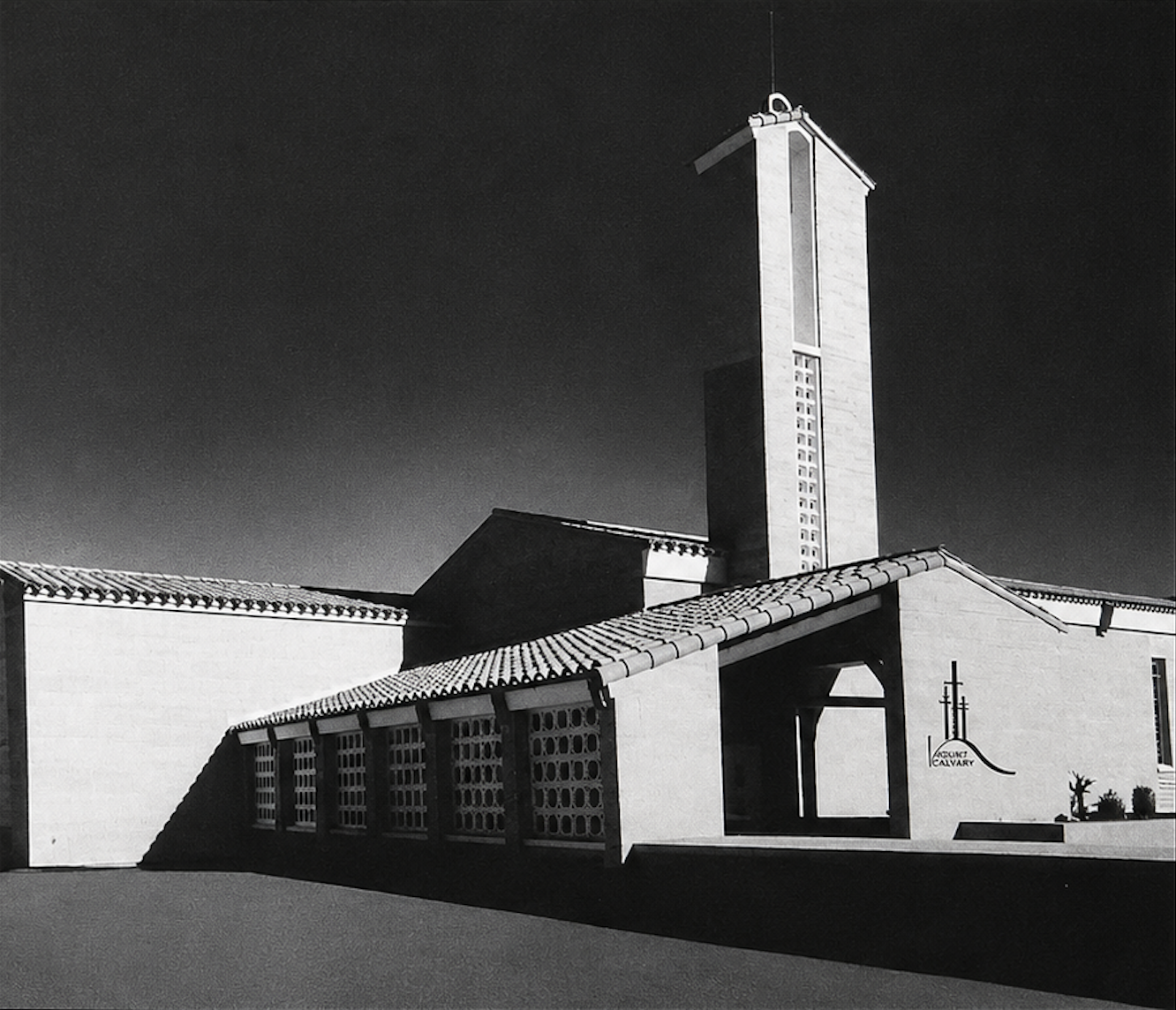
The church building was dedicated on September 28, 1952.
The Sanctuary
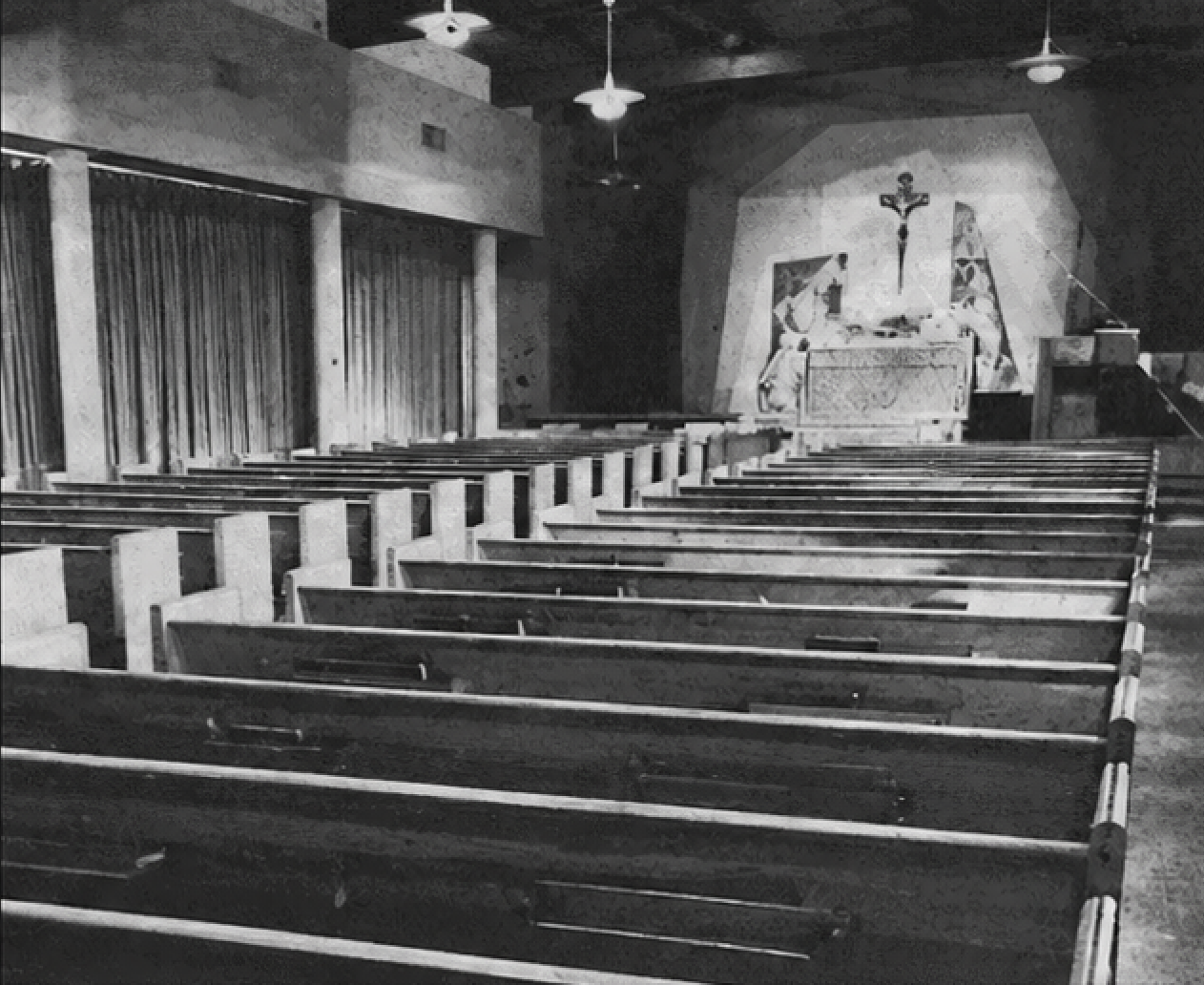
The modernistic design on the altar wall and the hand-carved crucifix are shown in this view of the church interior. Olive green beams stretch across the ceiling, and a gold drapery on the left separates an elevated platform from the sanctuary.
On Sunday, September 28, 1952, the first Missouri Synod Lutheran congregation in Phoenix proudly dedicated their new house of worship to the glory of God. The cost of constructing the neo-Spanish building was $105,000. The design incorporated both traditional and modern techniques of architecture.
The parish hall and the chapel (sanctuary) were separated by gold-colored draperies. The parish hall was located immediately to the north of the large row of columns, in what today is used as the main part of the seating area for worship services. An additional large column was formerly located where a center aisle now leads to the altar area.
The floor of the parish hall section of the building was elevated sixteen inches higher than the chapel floor. It was on the same floor level as the current entry at the northwest corner of the sanctuary. The north wall of the parish hall was comprised of arcadia doors that opened out to the patio. Modern-fold doors were used to define Sunday School areas within the parish hall. The parish hall was also able to serve as an overflow area to the chapel (sanctuary) by pulling open the gold-colored draperies. As in most congregations the parish hall was also the scene of many potluck dinners and other large gatherings during those early years.
The east wall of the chapel stopped where the current inside doorway to the sanctuary is now located. This area was extended outward (toward the east) during a later remodeling project. An office and a kitchen were situated in what is now the sacristy.
A Parsonage is Built
In 1956 a newly built three-bedroom parsonage was dedicated for use by Pastor Engelbrecht and his family. The house was constructed in the northeast corner of the property, fronting onto Colter Avenue.
Luther Hall
As the new congregation grew, the need for more education space was solved by the construction of an addition to the northwest corner of the sanctuary. In September of 1957 Luther Hall was dedicated. In later years this addition has been known as the office area and Fellowship Hall or Church Lounge. This part of the building runs parallel to 7th Avenue.
Remodeling of the Sanctuary
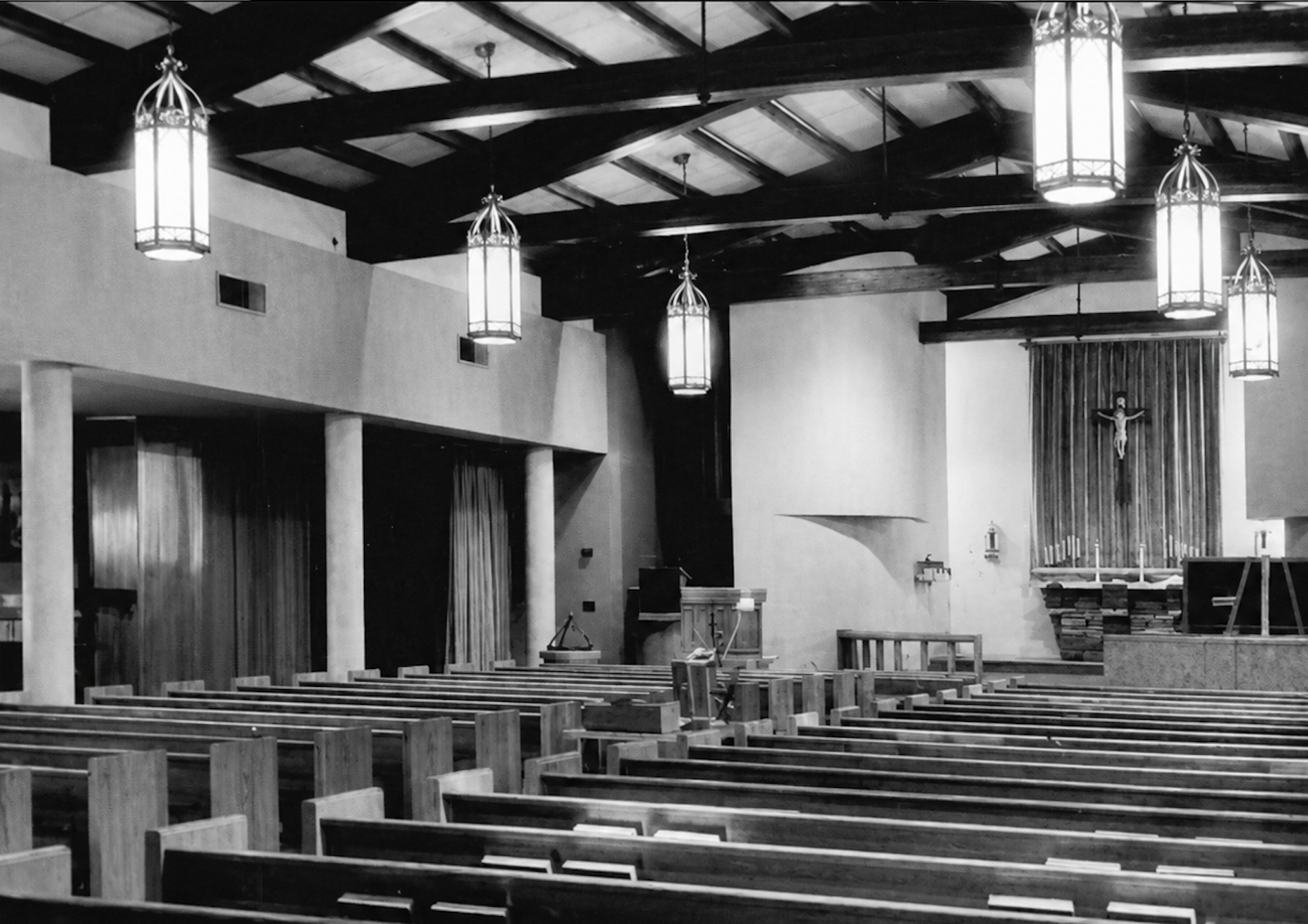
The remodeled chcel was dedicated November 8, 1959. A Persian print dossal curtain hung the full length of the chancel area. The carved crucifix was hung again in front of the dossal curtain.
Shortly after the dedication of Luther Hall the congregation decided to remodel the existing sanctuary. Richard Nelson, a member of the congregation, was engaged as the architect for the remodel. Much of the actual labor for this project was done by members of the congregation on a volunteer basis. Barney Schler, also a congregation member, served as building supervisor.
The entire chancel was remodeled. A new altar, built of flagstone, was put in place at the east end of the room. Long windows of cathedral glass were installed on either side of the altar.
The gold-colored draperies separating the chapel and the overflow area (formerly the parish hall) were removed, and the overflow area was made into a smaller chapel with a small altar.
The kitchen area was turned into a pastor’s study, and a bathroom was added.
Three long, narrow stained-glass windows were installed in the south wall of the sanctuary. These windows were designed by Dr. A. A. Kretzmann of Chicago, a noted Missouri Synod Lutheran church leader. The actual construction of the windows was done by the firm of Hilgart and Giannini, a Chicago firm. The installed windows were dedicated to God’s glory on April 19, 1959.
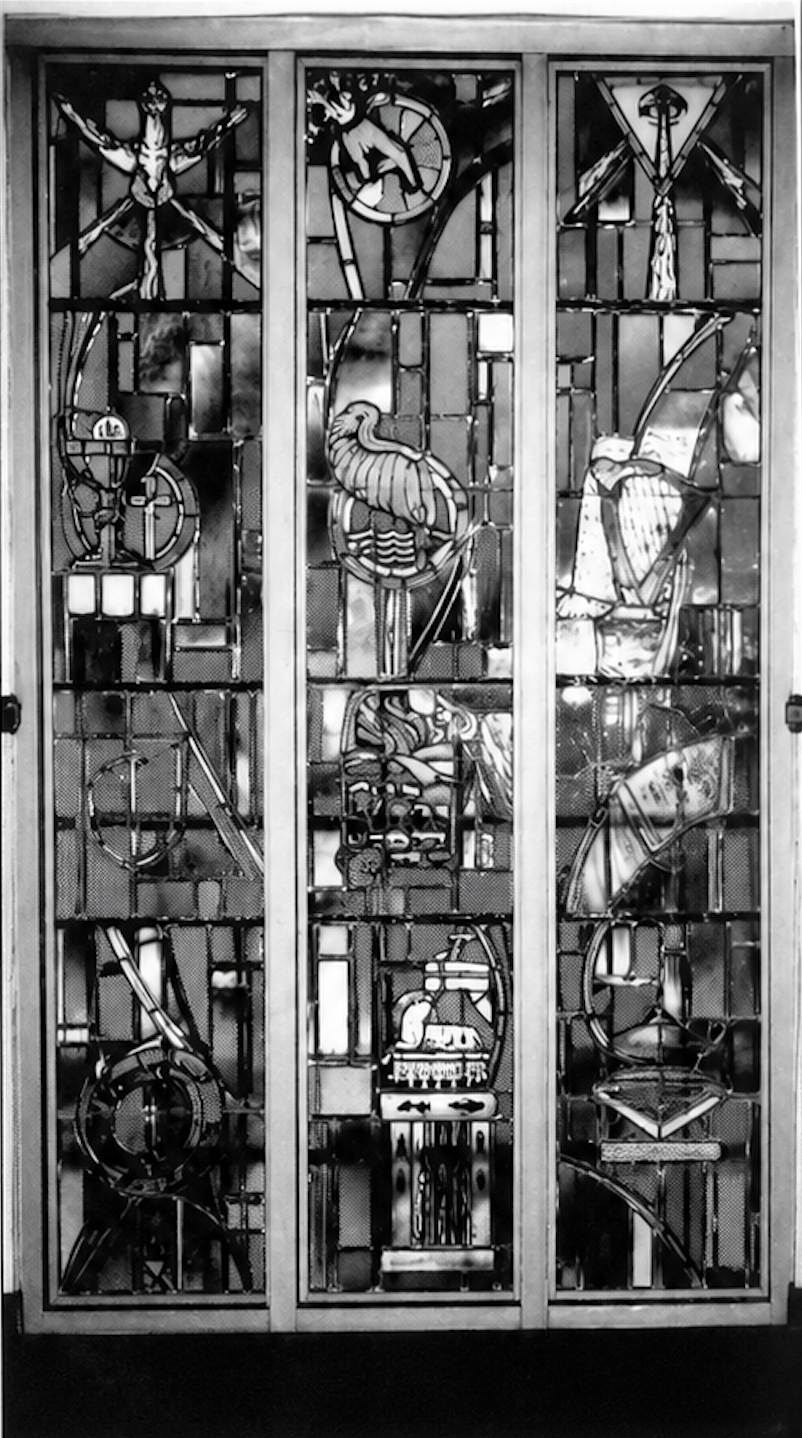
The stained-glass windows were removed from the south wall of the sanctuary, made into one window and installed on the easter wall of Luther Hall. Rich in symbolism, the panels of these windows show, from l. to r/, Row 1: The descending dove, representing the Holy Spirit. The creating Hand of God. The all-seeing Eye of God. Row 2: The chalice and wafer, representing the Lord’s Supper. The shell and drops of water, representing Holy Baptism. The harp and music, representing the liturgy and music. Row 3: Shield with Greek “Chi Rho,” the first two letters of “Christ.” The altar and flame, representing the Holy Fire. The Hebrew work for Jehovah (Yahweh). Row 4: Intertwined fish, representing Holy Baptism. The Lamb of God and the Book with seven seals; also, the door with marks of blood on lintel and doorposts. The Book and the flame - “The Word is a light…”
When the church was again remodeled in the early 1970s, these three windows were removed from the south wall and made into one window which was relocated to Luther Hall where it now can be seen just to the south of the office entrance to the patio. The placement of these three windows may still be detected on the exterior south wall of the sanctuary.
With the completion of the remodeling of the sanctuary and chancel, another service of dedication to God was held on November 8, 1959.
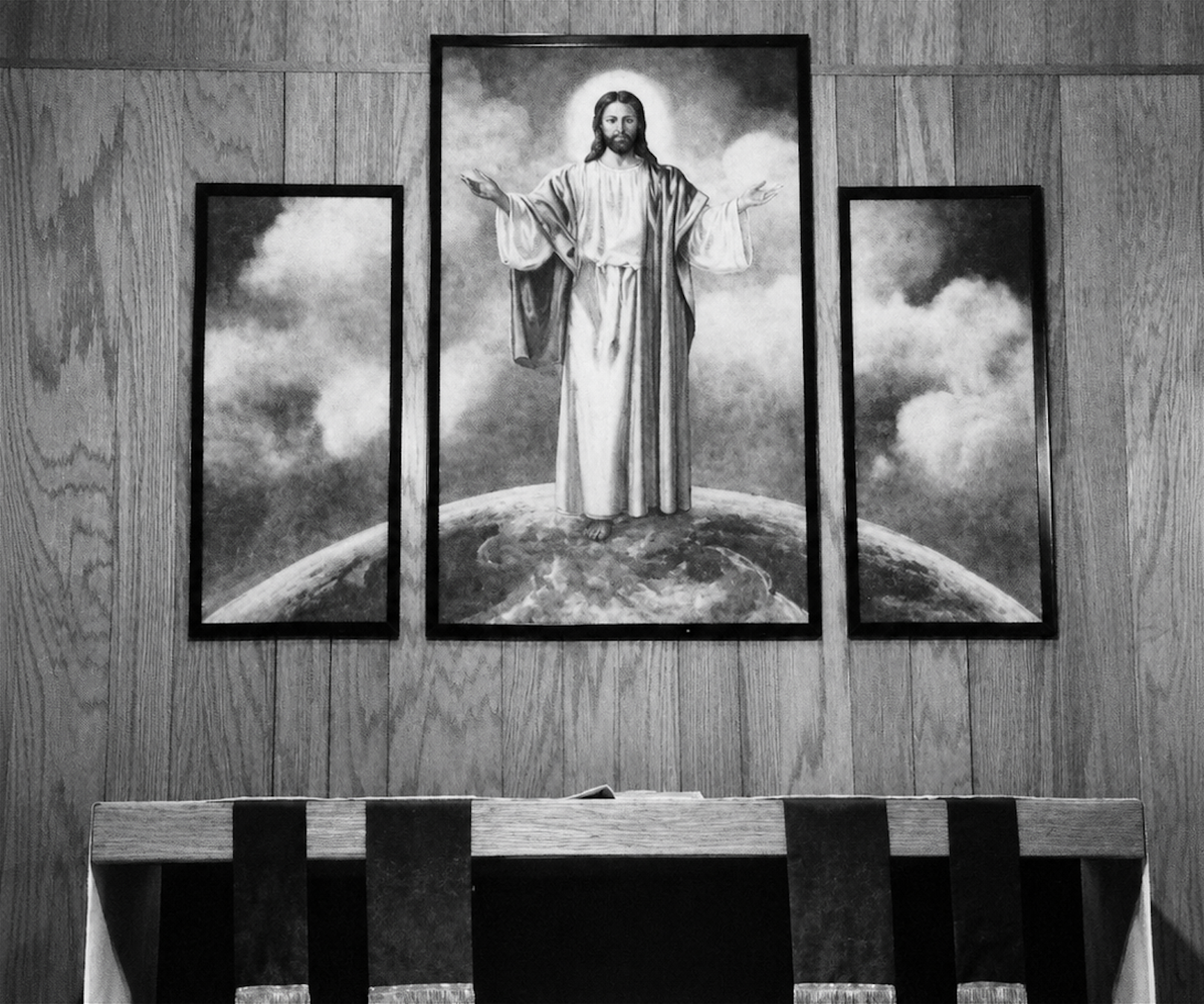
The overflow area was transformed into a small chapel with an altar located on the east wall.
New School and Auditorium
An expanding congregation needed additional space, and on March 14, 1961, a groundbreaking service for a $145,000 five-year “pay-as-you-go” building project was held. This time the congregation was undertaking the building of school classrooms and an auditorium.
Phase One of the construction consisted of building four classrooms on the east side of the property, directly opposite the east end of the sanctuary building. The classrooms were constructed in a row running from north to south. This phase was completed sometime in 1961.
Phase Two began one or two years after the completion of Phase One when additional funds became available. This phase included the construction of a kitchen and a library, which were built to the west of the classroom building and ran parallel to it. There was a vacant area between the two structures. (This vacant area later was enclosed and became what is now the gymnasium.) It is assumed that this phase also included the structure that houses the existing boys’ and girls’ restrooms, as well as the area that is currently known as the Music Room.
In 1962 Phase Three began. There appears to have been some controversy as to what should be built during this project. There was much discussion as to whether the congregation should have an auditorium or a gymnasium. The proponents for the auditorium prevailed. The auditorium was constructed to join the classroom building on the east with the library/kitchen structure on the west.
The auditorium and classroom area was dedicated on October 2, 1966, by then-Pastor Harold Engelbrecht. In his honor the structure was named Engelbrecht Hall. In later years, however, it became known as the Education Building.
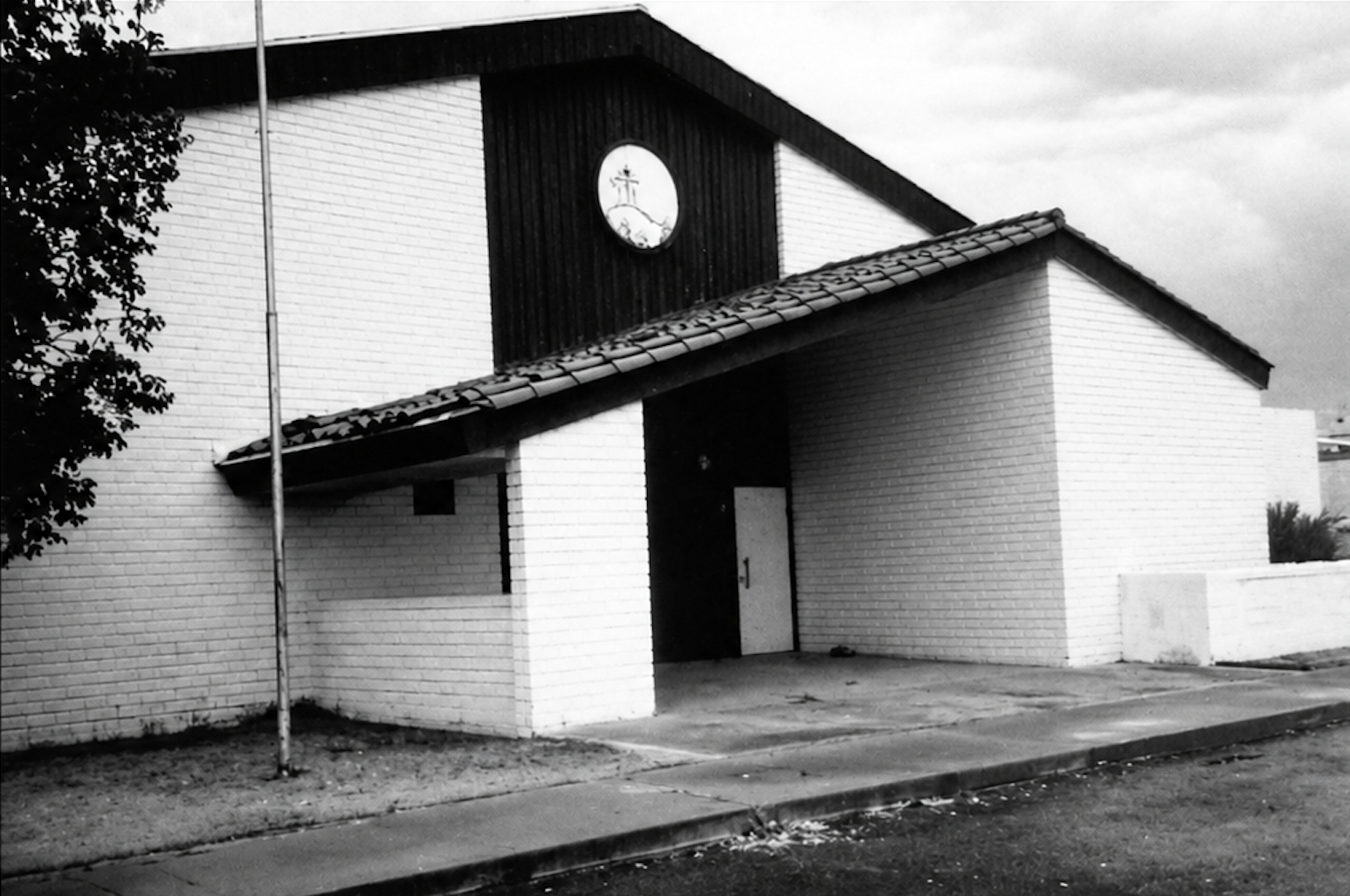
Engelbrecht Hall - Dedicated in 1966, this multi-purpose building also was known in later years as the Gym and the Education Building. The site of many large gatherings for Mount Calvary congregation, it also serves as the worship center for the Ethiopian-Eritrean congregation that began meeting on a weekly basis in 1999.
At a later date the auditorium was converted into a gymnasium. Since it was not originally designed to be a gymnasium, the basketball court is not regulation size. It also appears that at the time of this changeover, the structure was being called the Education Building instead of Engelbrecht Hall.
Also at a later date a large storage area was built on the north wall of the auditorium/gymnasium. This area eventually was used for other purposes, including a youth center and a computer-lab area for Valley Lutheran High School.
Another Redesign for the Sanctuary
In 1973 the congregation voted on another change for the sanctuary area. Francis Schultz, a member of Christ Church-Lutheran, one of Mount Calvary’s “daughter” churches, was engaged as the architect for another remodel project. This time the changes involved a much greater degree of construction than the previous remodeling had.
The altar was moved to the south wall, and a wrap-around seating concept was installed. The three stained-glass windows were removed from the south wall, made into one window and relocated just to the south of the office entrance to the patio.
The floor of the elevated parish hall/overflow area on the north side of the building was removed and brought down to the same level as the sanctuary floor. The center column was removed to permit a center aisle facing the altar.
The arcadia doors on the north wall were replaced with a solid block wall with five horizontal stained-glass windows inset across the top of the wall. Each window depicts some of the Last Words of Christ prior to His death on Good Friday.
The east end of the sanctuary was extended further to the east. Prior to this, there had been no exit from the east end of the church, so large double doors were installed. This addition also contained a small narthex area, the chamber for the pipes of the pipe organ, and room for the heating/cooling system.
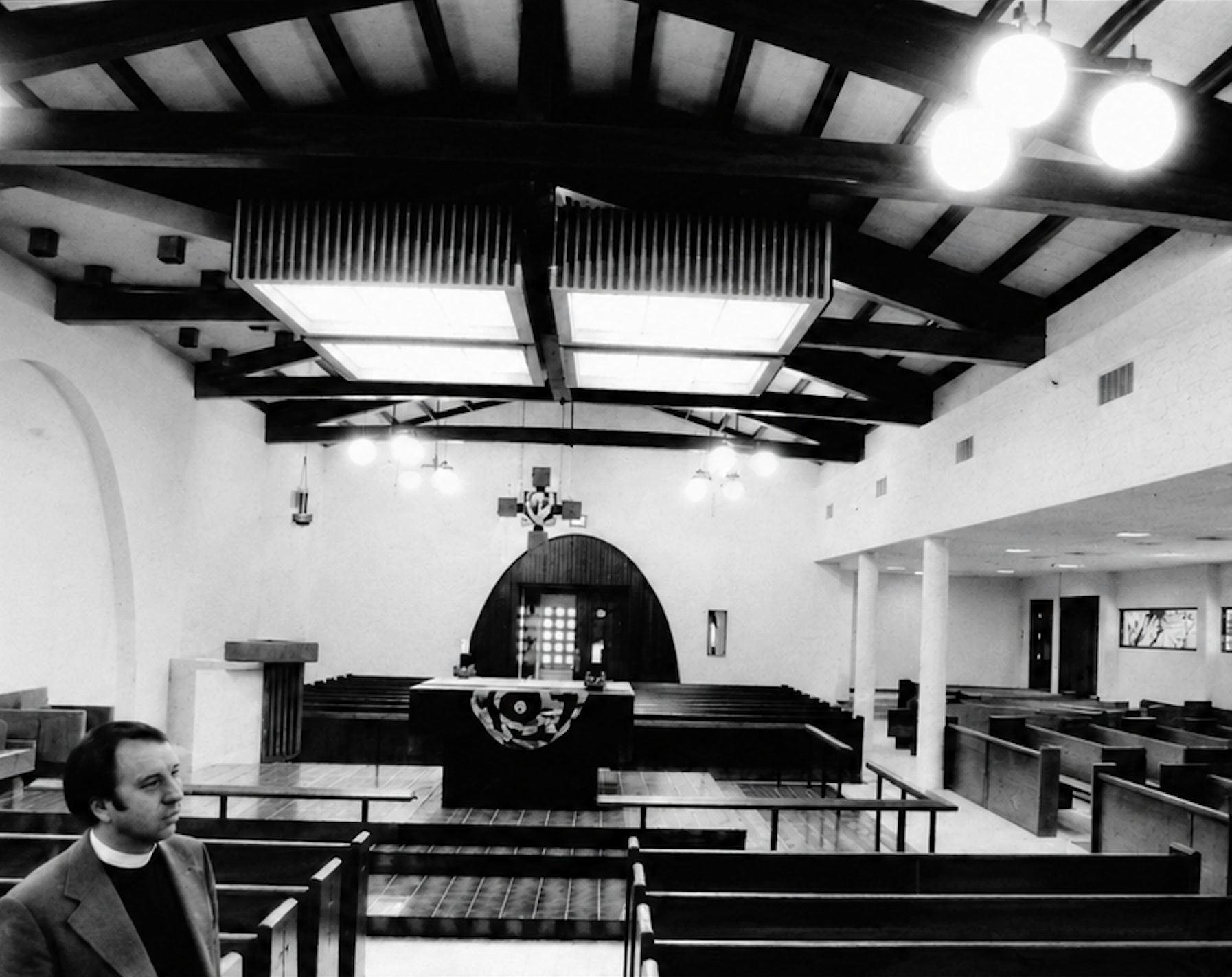
Pastor Beyer standing on east side of remodeled sanctuary. The main entrance at the west end of the sanctuary is shown at the back of the photo. The south-facing pews at the right fill the former overflow area.
New furnishings for the sanctuary and improved refrigeration systems for both the sanctuary and Luther Hall were installed. The cost for the entire remodeling project was $210,000.
Because of the length of time this renovation took, the congregation held worship services for about one year in Engelbrecht Hall.
The dedication services for the remodeled facilities took place on May 19, 1974, with much celebration and thanksgiving to God for another completed milestone in the life of Mount Calvary Lutheran Church of Phoenix.
Christian Children’s Center
During the 1980s a conscious effort was made by the pastor and the church leadership to foster intergenerational ministry. A Master Plan was adopted for the entire campus property, and the first phase of this plan called for the building of a day-care center.
In 1989 Architect Richard Johnson, a member of the congregation, was engaged to draw up plans for a day-care facility which would accommodate children from the age of six weeks to age five. Caviness Construction Company, the owners of which were also members of the congregation, was hired to construct the building. The site chosen for this phase of the Master Plan was the northwest corner of the property, right on the corner of 7th Avenue and Colter Street. This area had formerly been used as a park area that had been used by the congregation for outdoor gatherings in a garden-type setting.
The building was designed around a central courtyard and contained nine classrooms for children and a kitchen. A reception/office area at the front of the building opened to the east. Three infant rooms were furnished with cribs and age-appropriate equipment. Three toddler rooms contained small tables and chairs, as well as age-appropriate toys and other equipment. Three other rooms were set up with tables and equipment for preschool-age children. Each of the toddler and preschool rooms had access to bathrooms furnished with small toilets and sinks. The open courtyard in the center provided a light and airy atmosphere to the individual rooms, all of which opened onto it. Glass panels on either side of the doorway to each room also contributed to the feeling of lightness.
Dedication of this new facility was held in September 1990. After all the state and local requirements were met for a facility of this type, the Mount Calvary Christian Children’s Center opened for business.
In November 1994 an agreement was entered into with Maureen McGuire Design Associates, Inc., for the design, fabrication and installation of a stained-glass window, approximately 90 square feet in size, to be placed on the western wall of the lobby (between the office and the courtyard). The design ultimately decided upon was a Noah’s Ark interpretation, which took up the entire window wall.
The $12,500 cost of the window was covered by memorials and outright gifts to the Christian Children’s Center. The window was formally dedicated in June of 1995. An artist’s drawing of the window may be found in Chapter Eight.
Youth Center
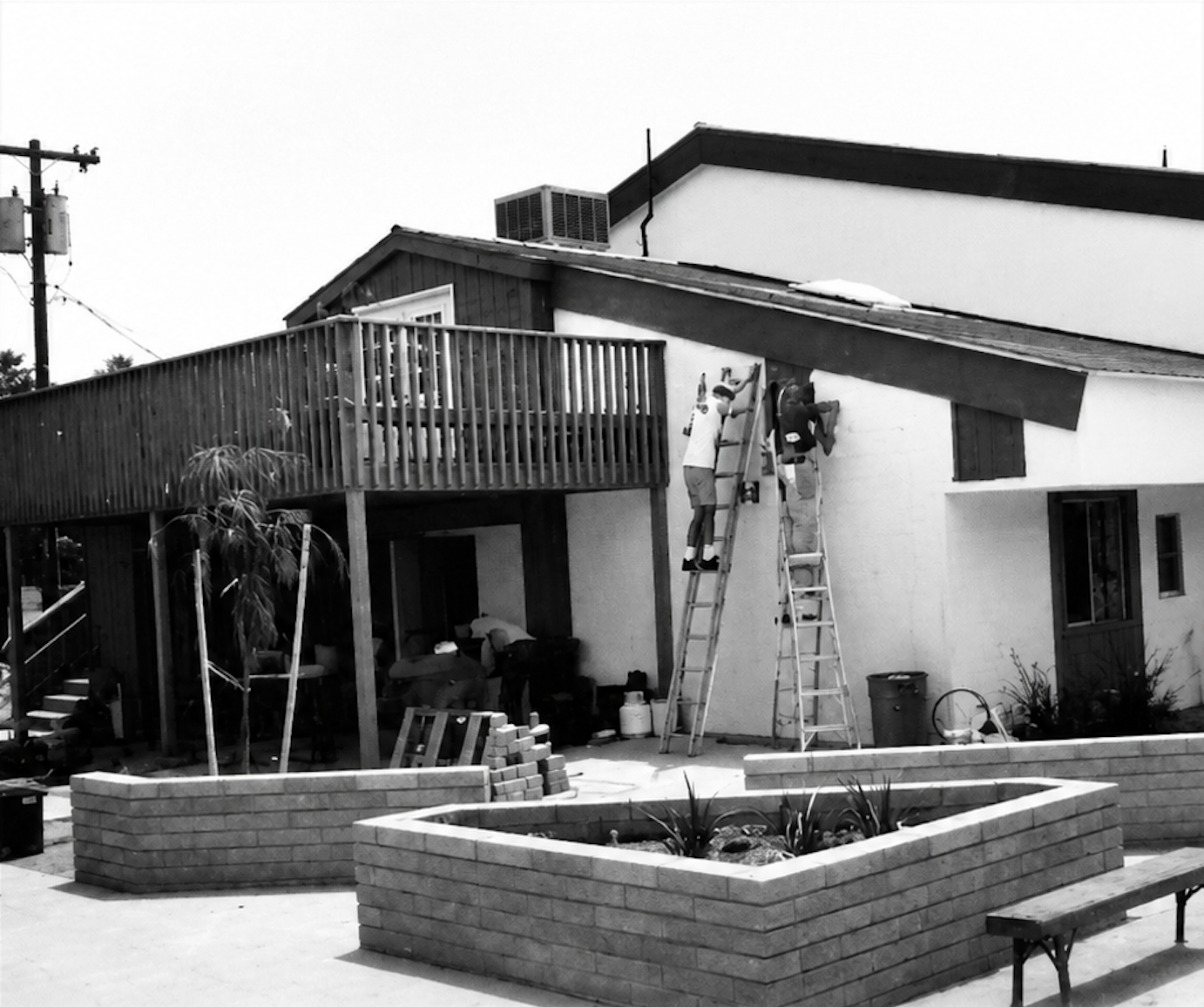
In the early 1990s the youth of the church requested permission to do a bit of reconstruction work themselves in order to have a special place for their meetings and other activities, as well as an office for the Youth Director. A portion of the storage area at the north end of the gymnasium was allotted to them, and a conversion got underway to change this area into a Youth Center. Mount Calvary’s youth made up the Building Committee, which was responsible for financial, construction and volunteer needs.
The storage area had been only one story in height; however, the new Center soon had a second story added on, complete with a deck. The youth sponsored fund-raising events to help pay for the construction. Eventually they were able to furnish it with tables, chairs, sofas, game equipment, a microwave oven, a pop machine, and other necessities of life for a teenager. The Center was dedicated on September 29, 1991.
Summary
The history of the construction of the church campus is somewhat obscure. We have relied on the 40th Anniversary book for information, as well as longtime congregational members for their recollections of the sequence of dates, events and descriptions. As a result, there may be some errors in the order of events and dates listed in this chapter.
The early years of Mount Calvary were a period of building construction and remodeling. This does not mean to imply that that was the main focus of the congregation. This chapter is devoted solely to the physical development and building of the church facilities. It has proved to be an interesting research.
It should also be noted that the only individuals mentioned by name are the architects, artists of the stained-glass windows and contractors who oversaw the building phases. The omission of congregational members’ names who devoted innumerable hours in building the physical campus is deliberate. A comprehensive list of the many members who gave countless hours of their God-given talents, time and gifts to the development of the campus is not available. Consequently, no member names are given. To all you members who participated in these many and varied projects, we thank you and wish you God’s blessings.